
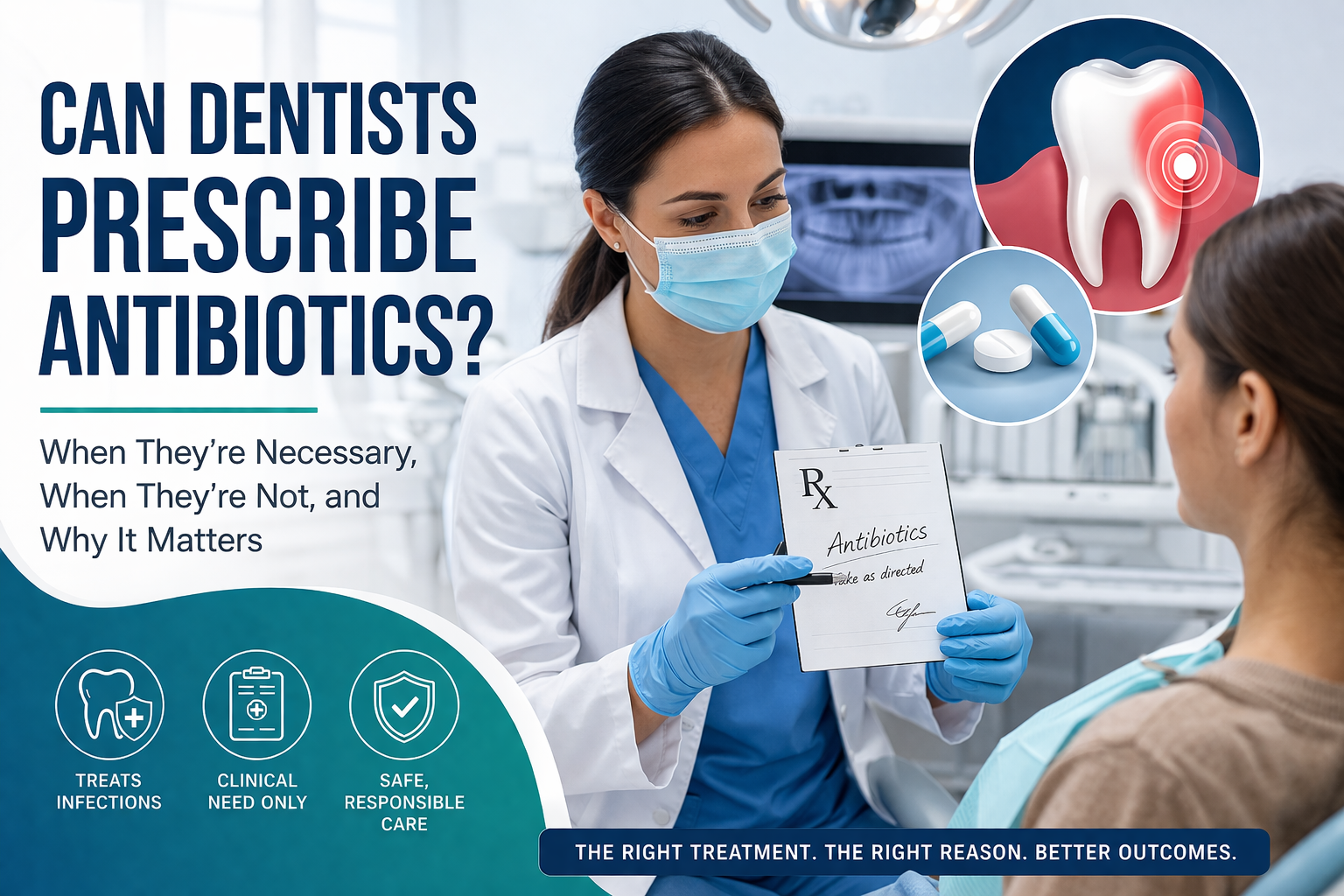
Yes, dentists can prescribe antibiotics, but they do not prescribe them for every toothache or dental problem. Dentists are licensed healthcare professionals who can prescribe medicines that relate to dental treatment, including antibiotics when there is a clear clinical need. In the UK, for example, the General Dental Council states that dentists may prescribe medicines to meet the identified dental needs of their patients, and in the U.S., the American Dental Association provides clinical guidance on when antibiotics are and are not appropriate in dental care.
That distinction matters because many people assume antibiotics are the default answer for gum pain, swelling, or a suspected tooth infection. In reality, antibiotics are only one part of treatment, and in many cases they are not the main treatment at all. A dental infection often needs direct dental care, such as draining the infection, removing the source of the problem, carrying out root canal treatment, or extracting the affected tooth. Both NHS guidance and ADA guidance emphasize that dental infections usually need urgent dental treatment rather than relying on antibiotics alone.
When can a dentist prescribe antibiotics?
A dentist may prescribe antibiotics when there is evidence that a bacterial dental infection is spreading, is severe, or could become dangerous. This may include facial swelling, systemic symptoms such as fever or malaise, or situations where the patient is at higher risk of complications. The ADA’s antibiotic guidance says antibiotics are generally indicated when a dental infection has systemic involvement, and NHS Scotland guidance similarly notes that antibiotics are recommended when there are signs of severe infection, systemic symptoms, or high risk of complications.
Dentists may also prescribe antibiotics in selected preventive situations before certain dental procedures. This is called antibiotic prophylaxis. However, this is not routine for everyone. ADA and American Heart Association guidance says preventive antibiotics before dental work should generally be reserved for patients with specific cardiac conditions that place them at the highest risk of poor outcomes from infective endocarditis.
So the short answer is yes, dentists can prescribe antibiotics, but only when the diagnosis and medical history justify it. Good prescribing is not about giving antibiotics “just in case.” It is about choosing them when they are truly likely to help. The CDC describes antibiotic stewardship as making sure antibiotics are prescribed only when needed, using the right drug, dose, and duration.
When antibiotics are usually not needed
This is where many patients are surprised. Not every dental pain problem is an infection, and not every infection needs antibiotics. The ADA guideline for dental pain and swelling advises that, for many pulpal and periapical conditions in otherwise healthy adults, dentists should prioritize procedures such as pulpotomy, pulpectomy, nonsurgical root canal treatment, or incision and drainage instead of prescribing antibiotics.
For example, a patient may have a severe toothache caused by inflammation inside the tooth, but if the infection is localized and there are no systemic symptoms, antibiotics may offer little benefit. In those situations, direct dental treatment addresses the source, while antibiotics may add unnecessary risk. NHS dental abscess guidance also makes clear that an abscess will not go away on its own and needs treatment from a dentist.
Repeated courses of antibiotics without proper dental treatment can also be ineffective. NHS Scotland guidance specifically notes that repeated antibiotics alone, without drainage, are not appropriate and do not prevent the spread of infection effectively. That is why a dentist may tell a patient, “You need treatment, not just tablets.”
Why dentists should avoid unnecessary antibiotics
Overprescribing antibiotics is a serious healthcare issue. Antibiotics can cause side effects, including stomach upset, allergic reactions, and more serious complications in some patients. They also contribute to antimicrobial resistance, which happens when bacteria adapt and antibiotics become less effective. The CDC and ADA both promote antibiotic stewardship in dentistry because improving antibiotic use helps protect patient safety and reduce resistance.
This means a careful dentist is not being dismissive by refusing to prescribe antibiotics when they are not needed. In many cases, that is actually the safer and more evidence-based approach. Good dental care means treating the cause of the problem while avoiding medication that offers little benefit.
What antibiotics do dentists commonly prescribe?

When antibiotics are indicated, dentists may prescribe drugs commonly used for bacterial dental infections. Guidance cited by the CDC includes amoxicillin or penicillin V potassium as common options when antibiotic therapy is needed for a dental infection. NHS medicine guidance also notes that amoxicillin is used for bacterial infections including dental abscesses.
In some cases, a dentist may choose alternatives based on allergy history, medical conditions, current medications, or local prescribing guidance. The exact antibiotic and dose should always be decided by the treating clinician after reviewing the patient’s health background. That is one reason patients should not self-medicate with leftover antibiotics or antibiotics borrowed from someone else.
Can dentists prescribe antibiotics for gum infections?
Sometimes, yes. Dentists may prescribe antibiotics for certain gum or periodontal infections, especially if the infection is acute, spreading, or accompanied by swelling and systemic symptoms. But again, antibiotics alone are rarely the full answer. Cleaning, drainage, oral hygiene support, and treatment of the underlying dental or gum disease remain essential. The broad clinical principle in dental guidance is that source control and dental intervention come first, with antibiotics used selectively when clinically justified.
Can dentists prescribe antibiotics over the phone?
Policies can vary by country, state, and practice rules, so this is not a simple yes-or-no issue everywhere. In general, dentists are expected to prescribe responsibly and based on an appropriate clinical assessment of the patient’s dental needs. Regulatory guidance emphasizes that prescribing should be tied to identified patient need, which usually means the dentist must have enough information to make a safe decision.
In practice, a dentist may sometimes issue a prescription after assessing a patient remotely, especially in urgent situations, but this depends on local rules, the dentist’s judgment, and whether the clinical picture is clear enough to prescribe safely. Because prescribing rules differ by jurisdiction, patients should contact their dental practice directly for advice specific to their location.
What should patients do if they think they need antibiotics?
The first step is not to assume that antibiotics are the answer. Instead, patients should book an urgent dental appointment if they have persistent tooth pain, swelling, pus, a bad taste in the mouth, fever, or difficulty chewing. NHS guidance says a dental abscess needs urgent treatment, and patients should seek urgent advice if they have worsening swelling or feel unwell.
Patients should also seek immediate medical attention if swelling affects breathing, swallowing, or starts spreading significantly. Those symptoms can point to a more serious infection requiring urgent care. Even when antibiotics are prescribed, patients should follow the instructions carefully and complete the prescribed course exactly as directed by their dentist unless they are told otherwise. The ADA chairside guide also notes the importance of reassessment and stopping antibiotics appropriately based on symptoms and clinical review.
Final thoughts
So, can dentists prescribe antibiotics? Absolutely. Dentists are qualified to prescribe antibiotics for dental conditions when they are clinically appropriate. But the better question is whether antibiotics are actually needed for your specific problem. In modern dental care, the answer is often “not always.” Many dental issues need hands-on treatment, not just medication, and unnecessary antibiotics can do more harm than good.
For patients, the takeaway is simple: if you have tooth pain, swelling, or signs of infection, see a dentist promptly rather than trying to treat it yourself. A dentist can diagnose the cause, decide whether antibiotics are necessary, and provide the right treatment to solve the problem at its source.

 and Innovation by