
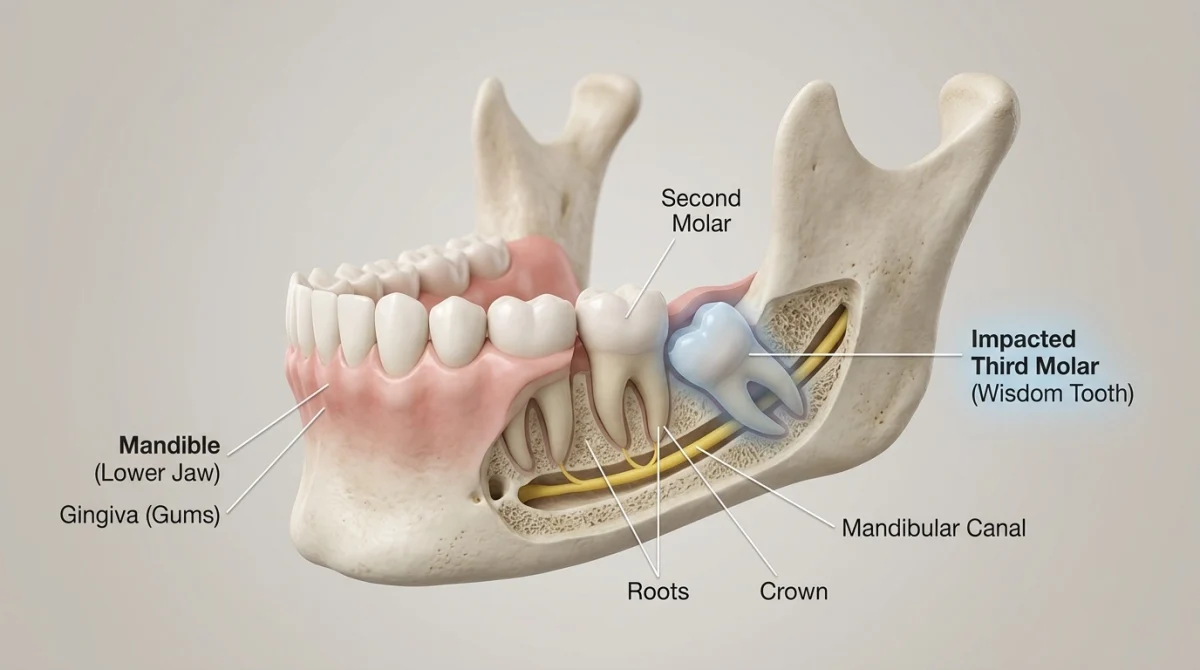
Wisdom teeth are the last adult teeth to appear in the mouth, usually emerging in the late teenage years or early adulthood. For some people, wisdom teeth erupt normally and never cause any problems. For others, there may not be enough space in the jaw for these teeth to grow properly.
When a wisdom tooth becomes trapped, grows at an angle, causes repeated pain, or leads to infection, removal may be recommended.
If you are considering wisdom tooth removal in G-8 Islamabad, it is useful to understand when extraction may be necessary, what symptoms to watch for, and what generally happens before and after the procedure.
This guide explains the common reasons dentists recommend wisdom tooth extraction and what patients can expect during treatment.
What Are Wisdom Teeth?
Wisdom teeth are the third set of molars located at the very back of the mouth.
Most adults can potentially develop four wisdom teeth:
- One in the upper right side
- One in the upper left side
- One in the lower right side
- One in the lower left side
However, not everyone develops all four.
Some people may have fewer wisdom teeth, while others may have wisdom teeth that remain completely beneath the gums.
Because wisdom teeth appear later than other permanent teeth, there may not always be enough room available for them to erupt properly.
What Is an Impacted Wisdom Tooth?
An impacted wisdom tooth is one that cannot fully emerge into the mouth because it is blocked by gum tissue, bone, or another tooth.
Wisdom teeth can become impacted in different positions.
For example, a wisdom tooth may:
- Grow toward the neighboring tooth
- Grow toward the back of the mouth
- Remain horizontal
- Partially emerge through the gums
- Stay completely below the gum and bone
Not every impacted wisdom tooth causes immediate symptoms. However, some can create dental problems over time.
Does Every Wisdom Tooth Need to Be Removed?
No.
Wisdom tooth removal is not automatically necessary simply because a wisdom tooth is present.
If the tooth has erupted normally, is healthy, can be cleaned properly, and is not affecting neighboring teeth or gums, your dentist may recommend monitoring it rather than removing it.
Extraction is usually considered when the wisdom tooth is causing problems or when there is a significant risk of complications.
A dental examination and, when needed, an X-ray can help determine the position of the tooth and whether treatment is necessary.
When Is Wisdom Tooth Extraction Necessary?
There are several situations in which a dentist may recommend wisdom tooth removal.
1. Repeated Pain
Pain at the back of the mouth is one of the most common reasons patients seek treatment for wisdom teeth.
Pain may be caused by:
- Pressure from an impacted tooth
- Gum inflammation
- Infection
- Decay
- Pressure on the neighboring molar
Occasional mild discomfort does not always mean a tooth must be removed, but repeated or worsening pain should be assessed by a dentist.
2. Infection Around a Partially Erupted Tooth
A partially erupted wisdom tooth can create a flap of gum tissue where food and bacteria become trapped.
This may lead to inflammation or infection around the tooth.
This condition is often called pericoronitis.
Possible symptoms include:
- Pain
- Swollen gums
- Bad taste in the mouth
- Difficulty opening the mouth
- Bad breath
- Tenderness around the tooth
If infection repeatedly returns, extraction may be recommended after the area has been assessed and treated appropriately.
3. Tooth Decay
Wisdom teeth can be difficult to clean because of their position at the back of the mouth.
If a wisdom tooth is partially erupted or angled awkwardly, brushing and flossing may be particularly difficult.
This can increase the risk of tooth decay.
If the tooth develops significant decay and cannot be restored predictably, removal may be considered.
4. Damage to the Tooth Next to It
An impacted wisdom tooth may press against the second molar in front of it.
This can make the area difficult to clean and may contribute to:
- Tooth decay
- Gum problems
- Damage to the neighboring tooth
- Bone loss around the tooth
Protecting the healthy neighboring molar is often an important part of wisdom tooth treatment planning.
5. Gum Disease
Partially erupted wisdom teeth may create areas where plaque and bacteria collect.
Over time, this may contribute to gum inflammation or deeper gum pockets around the wisdom tooth or nearby molar.
If gum health is being affected, the dentist may discuss whether extraction is appropriate.
6. Cysts or Other Changes Around the Tooth
In some cases, a fluid-filled sac known as a cyst may develop around an impacted wisdom tooth.
Although this is less common than pain or infection, it can potentially affect the surrounding bone or nearby teeth.
Dental imaging helps dentists identify these types of changes.
What Are the Signs of a Problematic Wisdom Tooth?
You should consider arranging a dental examination if you experience symptoms such as:
- Pain at the back of the jaw
- Swelling around a back tooth
- Red or tender gums
- Difficulty chewing
- Bad taste around the wisdom tooth
- Persistent bad breath
- Jaw stiffness
- Difficulty opening the mouth fully
- Repeated gum infection
- Pain spreading toward the ear or jaw
These symptoms can have several possible causes, so a professional examination is needed to identify the actual problem.
How Is a Wisdom Tooth Evaluated?
If you visit a dentist for wisdom tooth removal in G-8 Islamabad, the first step is usually an examination.
Your dentist may check:
- Whether the tooth has erupted
- Its position in the mouth
- Gum health around the tooth
- Signs of decay
- Condition of the neighboring tooth
- Swelling or infection
- Your ability to clean the area
A dental X-ray may also be recommended.
The X-ray can help show:
- The direction of the wisdom tooth
- How deeply it is impacted
- The shape of the roots
- The amount of surrounding bone
- Its relationship to nearby anatomical structures
This information is important when planning treatment.
What Happens During Wisdom Tooth Removal?
The exact procedure depends on whether the wisdom tooth is fully erupted or impacted.
Simple Extraction
If the wisdom tooth is fully visible and easily accessible, it may sometimes be removed using a relatively straightforward extraction procedure.
The area is numbed with local anesthesia before the tooth is loosened and removed.
Surgical Extraction
If the tooth is impacted beneath the gum or bone, a surgical extraction may be required.
The procedure may involve:
- Numbing the treatment area
- Making a small opening in the gum
- Removing a small amount of surrounding bone when needed
- Dividing the tooth into smaller sections if necessary
- Removing the tooth
- Cleaning the area
- Placing stitches when appropriate
The dentist or oral surgeon will decide the most suitable approach based on the position of the tooth.
Is Wisdom Tooth Removal Painful?
During the procedure, local anesthesia is normally used to numb the area.
Patients may feel pressure or movement, but sharp pain should not normally be experienced while the area is adequately numb.
After the extraction, some discomfort is expected as the tissues heal.
Common temporary effects can include:
- Swelling
- Tenderness
- Mild bleeding
- Jaw stiffness
- Difficulty chewing hard foods
Your dentist will provide instructions on pain relief and aftercare based on your specific situation.
What Should You Expect After Extraction?
After wisdom tooth removal, a blood clot forms in the extraction site.
This clot is important because it protects the area and supports healing.
Patients are usually advised to follow their dentist’s instructions carefully.
General aftercare may include:
- Resting after the procedure
- Avoiding forceful rinsing during the early healing period
- Eating soft foods initially
- Keeping the mouth clean as instructed
- Avoiding smoking
- Avoiding drinking through a straw during early healing
- Taking prescribed or recommended medication correctly
- Avoiding touching the socket with fingers or objects
Your dentist may provide more specific advice depending on the complexity of the procedure.
What Is Dry Socket?
Dry socket is a possible complication after tooth extraction.
It may occur when the blood clot in the extraction site is lost or breaks down before the socket has healed sufficiently.
Symptoms may include significant pain that develops or worsens a few days after extraction.
The pain may spread toward the ear, temple, or jaw.
If you experience severe or increasing pain after wisdom tooth removal, contact your dentist for assessment.
How Long Does Recovery Take?
Recovery varies between patients.
Some people feel significantly better within a few days, while swelling and tenderness may take longer to settle after more complicated surgical extractions.
Factors affecting recovery can include:
- Position of the tooth
- Difficulty of the extraction
- Number of teeth removed
- General health
- Smoking
- Following aftercare instructions
The extraction site itself continues healing even after pain and swelling have improved.
Your dentist can provide a more specific recovery estimate after evaluating your case.
Can You Delay Wisdom Tooth Removal?
Whether it is safe to delay extraction depends on the reason the dentist has recommended removal.
If a wisdom tooth is healthy and causing no problems, observation may be appropriate.
However, repeatedly ignoring symptoms such as pain, infection, swelling, or damage to a neighboring tooth may allow the problem to become more difficult to manage.
A dental examination is the best way to determine whether monitoring or treatment is appropriate.
Looking for Wisdom Tooth Removal in G-8 Islamabad?
Wisdom teeth do not always need to be removed, but extraction may become necessary when they cause pain, infection, decay, gum problems, or damage to nearby teeth.
Early assessment can help determine whether a wisdom tooth can safely remain in place or whether removal should be considered.
If you are experiencing pain or swelling around a wisdom tooth and are looking for wisdom tooth removal in G-8 Islamabad, visit Smile and Skin Co. for a dental evaluation.
A dentist can examine the area, review any necessary dental imaging, and explain the most appropriate treatment options based on the position and condition of your wisdom tooth.
Book a consultation with Smile and Skin Co. in G-8 Islamabad to have your wisdom teeth assessed and discuss whether extraction is necessary.

 and Innovation by