

If you have ever gone in for a routine dental visit and been told you need X-rays, it is easy to wonder whether they are truly necessary. Some patients feel dentists “push” X-rays too often, especially when nothing hurts. That skepticism is understandable. Dental X-rays cost money, involve radiation, and can feel like an extra step added to a simple checkup. But in most cases, the reason dentists recommend them is not because they want more procedures. It is because many dental problems cannot be seen clearly with the naked eye alone. The American Dental Association says dental X-rays help diagnose damage and disease that may not be visible during a regular exam, and the FDA says they should be ordered to support diagnosis and treatment while still minimizing radiation exposure.
X-Rays Let Dentists See What Eyes Cannot
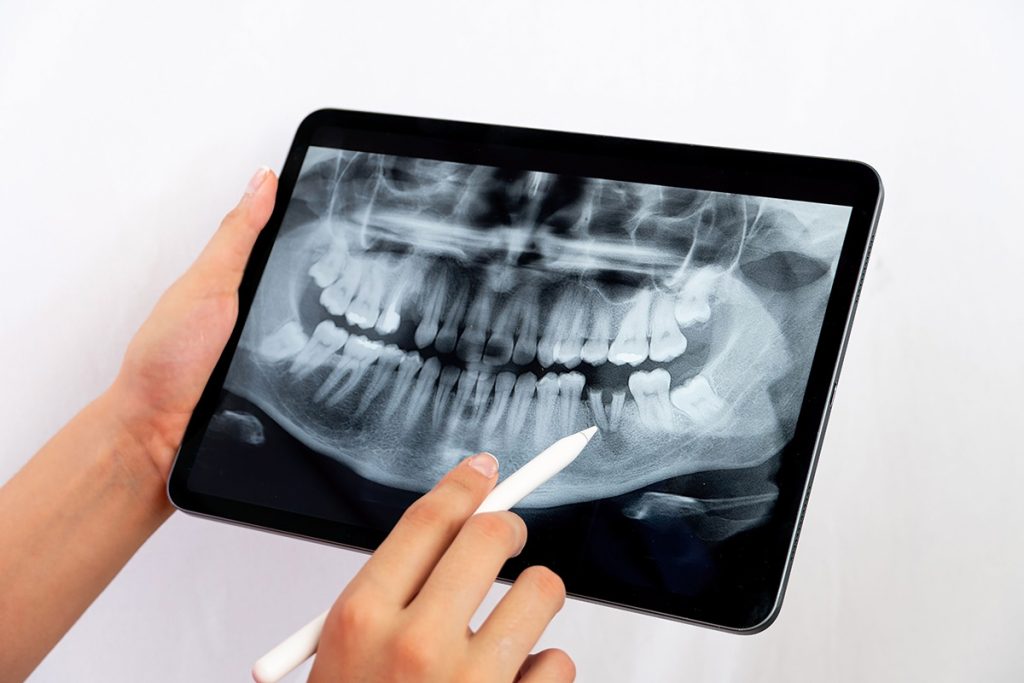
A dentist can look at your teeth, gums, and mouth during an exam, but some problems hide below the surface. X-rays help show areas between teeth, under fillings, below the gums, and inside the bone. According to ADA patient guidance, dental radiographs can help detect cavities between teeth or under restorations, bone disease, gum disease, infections under the gums, and even some tumors. They are also useful for seeing injuries and developmental issues in children. In other words, X-rays are not just pictures for the file. They are often how dentists catch problems before they become painful, expensive, or harder to treat.
Why Dentists Recommend Them Even When Nothing Hurts
One of the biggest reasons patients feel unsure about X-rays is that dentists often recommend them when there are no symptoms. But that is exactly the point of preventive care. Tooth decay between the teeth may not hurt at first. Bone loss from gum disease can progress quietly. An infection near a tooth root may not be obvious until it becomes severe. The ADA explains that X-rays can help identify disease and developmental problems before they become serious health issues, and that early detection can limit or prevent further damage in the mouth. So when a dentist recommends imaging during a symptom-free visit, it is often because they are trying to find problems early, not invent them.
There Is No Fixed Schedule for Everyone
A lot of frustration comes from the belief that dental offices automatically take X-rays every six months or once a year no matter who you are. Official guidance says that is not how X-rays should be used. The ADA states there is no “one size fits all” interval for dental X-rays. How often they are needed depends on your age, current oral health, signs and symptoms, past dental history, and risk for disease. The FDA and ADA guidance also says imaging recommendations are meant to support the dentist’s judgment for each individual patient, not serve as a rigid rule. A patient with frequent cavities or ongoing gum problems may need them more often than a patient with low risk and stable oral health.
Good Dentists Are Supposed to Order X-Rays Only When Clinically Necessary
This is one of the most important points. Modern guidance does not support routine X-rays just because it is convenient or profitable. The ADA’s 2026 recommendations say dental X-rays should be ordered only when clinically necessary, after reviewing the patient’s medical and dental history, prior images, and current clinical findings. The FDA’s guidance on appropriate imaging also says an imaging test is appropriate when the expected health benefit outweighs the negatives. In plain English, a dentist should have a reason for recommending the X-ray, and that reason should be tied to diagnosis, treatment planning, or monitoring a real problem.
Why It Can Feel Like They Are Being “Pushed”
Even when a recommendation is legitimate, it may still feel like pressure to the patient. Dental offices move quickly, and sometimes the explanation is too brief. A patient may hear, “You’re due for X-rays,” without being told what the dentist is looking for or why now is the right time. That communication gap can make the recommendation feel automatic or sales-driven. The ADA itself encourages discussion between dentists and patients so they can make informed decisions together. A recommendation should not feel like a command. A good dental team should be able to explain what type of image they want, what they are checking for, and why previous images are or are not enough.
X-Rays Are Also Used for More Than Cavities
Many people think dental X-rays are only for finding decay, but dentists use them for much more than that. They can help monitor bone levels around teeth, evaluate infections near roots, assess wisdom teeth, check healing after treatment, plan root canals, orthodontics, implants, and in some cases evaluate jaw or temporomandibular issues. The ADA’s updated patient-selection recommendations specifically address situations involving cracked teeth, endodontics, implant planning, and more. So even if your teeth look fine in the mirror, your dentist may still need X-rays to plan or confirm treatment safely.
What About Radiation?
Radiation is the biggest reason many patients hesitate, and it is a fair concern. Dental X-rays do use ionizing radiation, which is why professional guidance emphasizes using them only when justified and keeping exposure as low as reasonably achievable, a principle called ALARA. The ADA says dental imaging represents a minor contribution to total radiation exposure and accounts for less than 1 percent of the collective annual effective dose from medical imaging. The 2026 ADA release also notes that in some cases, a dental X-ray delivers less radiation than a single day of natural background radiation. That does not mean radiation should be ignored. It means the risk is generally low when imaging is used appropriately and modern dose-reduction practices are followed.
Modern Dental Imaging Uses Safety Measures
Today’s recommendations focus heavily on reducing exposure while still getting the image the dentist needs. The ADA recommends steps such as using digital imaging instead of conventional film, limiting the beam to the area of interest through rectangular collimation, properly positioning patients, and using previous images when possible instead of repeating studies. In 2024, an ADA expert panel also concluded that lead abdominal aprons and thyroid collars are no longer routinely recommended because modern digital equipment and tighter beam restriction better protect patients, and shields can sometimes interfere with the image and force retakes. That update surprises many patients because shielding used to feel like proof of safety, but current guidance focuses more on reducing the dose at the source and avoiding unnecessary repeat images.
Are Dentists Ever Wrong to Recommend Too Many X-Rays?
Like any field, dentistry is not perfect. It is possible for imaging to be ordered more often than necessary in some settings, which is why professional guidance matters. The FDA notes that some imaging studies across medicine can be inappropriate, and the ADA’s own policies stress that patients should be exposed to radiation only when clinically necessary. The ADA also states that third-party payers should not request images solely for administrative purposes. That is an important distinction: X-rays should serve patient care, not paperwork. So the right takeaway is not “all X-rays are overused” or “all recommendations are justified.” The better takeaway is that X-rays should be individualized, explainable, and tied to a clear clinical need.
What Patients Should Ask Before Agreeing
If you are unsure why an X-ray is being recommended, ask. You have every right to understand your care. Useful questions include: What are you looking for? Why do I need this today? Could you use my previous X-rays instead? What type of X-ray is this? How will it change treatment? A thoughtful dentist should be able to answer clearly. The ADA encourages dentists to talk with patients who are concerned about radiographs and to make a good-faith effort to use previous images when available. That conversation is part of good care, not a challenge to the dentist’s authority.
The Real Reason Dentists Recommend X-Rays
So, why do dentists “push” X-rays? In the best-case scenario, they are not pushing them at all. They are recommending a diagnostic tool that helps them find disease they cannot see otherwise, catch issues early, plan treatment safely, and avoid missing hidden problems. The key is that those recommendations should be based on your individual risk, history, symptoms, and exam findings, not on a fixed schedule or office habit. Good dentistry is not about taking more X-rays. It is about taking the right X-rays at the right time for the right reason.

 and Innovation by