

Dental problems rarely arrive at a convenient time. A sudden toothache, chipped tooth, swollen gum, broken filling, or dental discomfort can interrupt your entire day. When that happens, many people immediately search for a walk-in dentist in G8 Islamabad because they want fast, reliable dental care without waiting days for an appointment. If you live, work, study, or commute near G-8 Markaz, Islamabad, having access to a trusted dental clinic nearby can make a big difference. Smile and Skin Co., located in G-8 Markaz, offers a convenient option for patients looking for professional dental care in a comfortable and modern setting. Why People Search for a Walk-In Dentist in G8 Islamabad A walk-in dental visit is often needed when a dental issue becomes uncomfortable, painful, or urgent. While routine dental checkups can usually be planned in advance, some problems need quicker attention. Common reasons people look for a walk-in dentist include: Ignoring these symptoms can make the problem worse. A small cavity may turn into severe tooth pain. Gum swelling may indicate infection. A cracked tooth may become more difficult to restore if treatment is delayed. That is why visiting a dentist as early as possible is important. Dental Care Close to G-8 Markaz G-8 is one of Islamabad’s busy and accessible sectors. Many people visit G-8 Markaz for work, shopping, food, offices, and daily errands. For patients living in nearby areas such as G-7, G-9, F-8, F-10, Blue Area, and surrounding sectors, finding a dental clinic in G-8 can be convenient. When dental discomfort starts during the day, a nearby dental clinic can save time and stress. Instead of delaying treatment or travelling far across the city, patients can contact a local clinic and ask about same-day availability. At Smile and Skin Co., patients can receive dental care in a professional environment designed around comfort, hygiene, and patient experience. For anyone searching online for a dentist near me in G8 Islamabad or walk-in dentist in G-8 Markaz, Smile and Skin Co. is a local option to consider. What to Expect During a Walk-In Dental Visit A walk-in dental visit usually begins with a discussion of your symptoms. The dentist may ask when the pain started, how severe it is, whether it increases while eating, and whether you have swelling, bleeding, sensitivity, or previous dental treatment in that area. After that, the dentist may examine your teeth, gums, bite, and affected area. In some cases, an X-ray may be recommended to understand what is happening below the surface. This helps the dentist identify whether the issue is related to decay, infection, gum disease, trauma, wisdom teeth, or another dental concern. Depending on the diagnosis, the dentist may suggest immediate treatment, temporary relief, medication, or a follow-up procedure. The goal of a walk-in visit is to reduce discomfort, identify the cause, and prevent the condition from becoming more serious. When Should You See a Dentist Immediately? Not every dental problem is an emergency, but certain symptoms should not be ignored. You should contact a dentist as soon as possible if you experience: Dental pain is often a warning sign. Even if the pain comes and goes, the underlying cause may still need treatment. Quick dental care can help protect your natural teeth and avoid more complicated procedures later. Services Patients May Need During a Walk-In Visit The treatment you need depends on the cause of your symptoms. During a same-day or urgent dental consultation, a dentist may recommend one or more of the following: Tooth Pain Evaluation Tooth pain can happen because of cavities, infection, cracked teeth, gum problems, or sensitivity. A proper dental examination helps identify the exact cause. Dental Filling If a cavity is causing discomfort, a filling may be needed to restore the tooth and prevent further decay. Root Canal Consultation Severe tooth pain, especially pain that lingers or worsens at night, may indicate infection inside the tooth. In such cases, root canal treatment may be discussed. Gum Treatment Swollen, bleeding, or painful gums may be signs of gum inflammation or infection. Early treatment can help improve gum health and prevent progression. Broken or Chipped Tooth Repair A chipped or broken tooth should be checked quickly. Depending on the damage, the dentist may recommend bonding, filling, crown, or another restorative option. Wisdom Tooth Pain Assessment Wisdom tooth pain is common among young adults. If a wisdom tooth is impacted, infected, or causing swelling, the dentist may recommend further treatment. Why Choose Smile and Skin Co. in G8 Islamabad? When choosing a dentist, patients want more than quick access. They also want a clinic that provides careful diagnosis, clear communication, clean surroundings, and a comfortable experience. Smile and Skin Co. is positioned as a dental clinic in Islamabad offering expert care, smile makeovers, and advanced dental treatments. Its location in G-8 Markaz makes it accessible for patients who need dental care near the center of Islamabad. The clinic is also suitable for patients who are nervous about dental treatment. Many people delay dental visits because of fear, discomfort, or past negative experiences. A patient-focused dental team can help make the visit calmer by explaining the procedure, answering questions, and guiding patients step by step. Walk-In Dentist vs. Appointment-Based Dental Visit A walk-in visit is helpful when you need quick attention, but appointments are still recommended for planned treatments such as detailed checkups, cosmetic dentistry, teeth whitening, orthodontic consultation, dental implants, veneers, or smile makeovers. If you have pain or swelling, it is better to call the clinic first and ask about available timings. This helps the dental team prepare for your visit and guide you properly. Calling ahead can also reduce waiting time and confirm whether same-day consultation is possible. For planned dental care, booking an appointment allows the dentist to reserve proper time for examination, discussion, and treatment planning. Tips Before Visiting a Walk-In Dentist Before visiting a dentist for urgent care, try to note your symptoms clearly. This can help the dentist understand your condition faster.
How to Choose the Right Dental Clinic in G-8 Islamabad
Choosing the right dental clinic is an important decision for your health, comfort, and confidence. Whether you need a routine dental checkup, scaling and polishing, teeth whitening, braces, root canal treatment, dental implants, or emergency dental care, the clinic you choose can make a big difference in your experience and results. If you live or work near G-8 Islamabad, you may have several dental options around you. The question is: how do you know which dental clinic is right for you? A good clinic should offer more than just treatment. It should provide professional care, hygiene, clear communication, comfort, and a patient-focused approach. At Smile and Skin Co., we believe patients deserve dental care that is safe, honest, and comfortable. This guide will help you understand what to look for when choosing a dental clinic in G-8 Islamabad. 1. Start with Location and Accessibility Convenience matters when choosing a dental clinic. Dental treatment is not always a one-time visit. Some procedures, such as braces, root canal treatment, crowns, implants, and gum care, may require follow-up appointments. Choosing a clinic near your home, office, school, or daily route makes it easier to stay consistent with treatment. G-8 is one of Islamabad’s most accessible sectors, located near G-9, F-8, Blue Area, PIMS, and other central areas. For families, professionals, and students, a dental clinic in G-8 Islamabad can save time and make regular visits easier. When selecting a clinic, check whether it is easy to reach, has suitable appointment timings, and offers services that match your needs. 2. Check the Range of Dental Services A good dental clinic should provide a wide range of dental services so you do not have to visit different places for every concern. Common services to look for include dental checkups, scaling and polishing, fillings, root canal treatment, tooth extraction, teeth whitening, crowns, bridges, braces, aligners, implants, children’s dentistry, and emergency dental care. Having multiple services available under one roof helps patients receive more complete care. For example, a patient may visit for tooth pain and discover they need a filling, root canal, crown, or gum treatment. A clinic with a broad service range can guide the patient properly from diagnosis to treatment. At Smile and Skin Co., patients can receive professional dental care for routine, cosmetic, restorative, and preventive needs in G-8 Islamabad. 3. Look for Hygiene and Infection Control Hygiene should be one of your top priorities when choosing a dental clinic. Dental procedures involve close contact with the mouth, instruments, and sometimes blood or saliva. This makes proper sterilization and infection control essential. The CDC recommends that dental patient-care devices should be cleaned, disinfected, or sterilized according to their use and risk level. Instruments that enter soft tissue or bone require heat sterilization. When visiting a clinic, notice whether the environment looks clean, instruments are handled carefully, gloves and masks are used appropriately, and the staff follows professional hygiene practices. A clean clinic shows respect for patient safety. 4. Evaluate the Dentist’s Communication Style A good dentist does not simply treat teeth; they also educate and guide patients. Before starting any treatment, your dentist should explain the problem, available options, expected results, cost considerations, and aftercare instructions. Good communication is especially important for patients who feel nervous about dental treatment. If a dentist listens carefully, answers questions clearly, and avoids rushing the appointment, you are more likely to feel comfortable and confident. The American Dental Association’s patient education site advises people to choose a dentist who can be a trusted partner in dental care decisions. At Smile and Skin Co., we focus on clear guidance so patients understand their oral health and treatment choices. 5. Consider Comfort and Patient Experience Dental anxiety is common. Many people delay treatment because they are afraid of pain, injections, dental sounds, or past bad experiences. The right dental clinic should make patients feel relaxed, respected, and cared for. Comfort can include a welcoming environment, polite staff, gentle handling, proper numbing when needed, and a dentist who explains each step. Small details can make a big difference, especially for children, elderly patients, and people with dental fear. When choosing a dental clinic in G-8 Islamabad, ask yourself: Do I feel comfortable here? Does the staff treat me respectfully? Does the dentist explain things in a way I understand? 6. Ask About Preventive Dental Care The best dental care is not only about treating problems after they happen. Preventive care helps reduce the risk of cavities, gum disease, bad breath, tooth loss, and emergency pain. Routine dental exams and cleanings are important for oral health. Cleveland Clinic notes that many people do well with six-month dental visits, while people with a higher risk of cavities, gum disease, or other oral health concerns may need more frequent visits. A good dental clinic should encourage regular checkups, scaling, brushing guidance, flossing advice, and early treatment. Preventive care is usually easier, more comfortable, and more cost-effective than delaying treatment until pain becomes severe. 7. Check Cosmetic and Restorative Options Many patients today want dental care that improves both health and appearance. A good dental clinic should understand smile aesthetics as well as oral function. Cosmetic services may include teeth whitening, veneers, tooth-colored fillings, smile design, and alignment options. Restorative services may include crowns, bridges, implants, root canals, and dentures. If you are looking for a brighter smile, better tooth shape, or replacement of missing teeth, choose a clinic that can explain realistic results. A trustworthy clinic will not overpromise. Instead, it will guide you according to your oral condition, budget, and long-term health. 8. Read Reviews, But Use Judgment Online reviews can help you learn about patient experiences, but they should not be your only deciding factor. Every patient has different needs, expectations, and treatment conditions. A clinic may be excellent for routine cleaning but may not offer the specific treatment you need. Look for patterns in reviews. Do patients mention cleanliness, professionalism, gentle treatment, clear communication, and good follow-up? These are
Root Canal Treatment in G-8 Islamabad: Save Your Tooth with Smile and Skin Co.
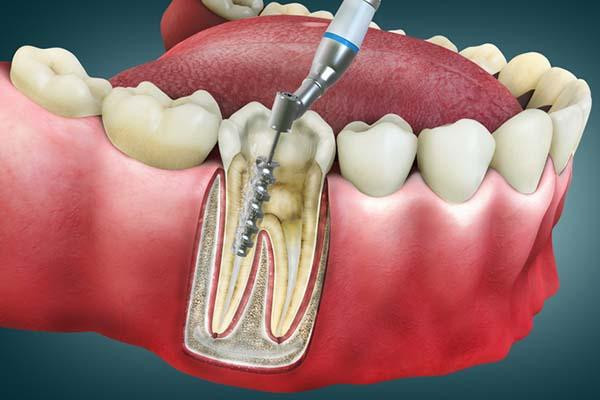
Tooth pain can affect your sleep, eating, work, and daily comfort. Many people ignore dental pain at first, hoping it will go away on its own. However, when pain is caused by infection inside the tooth, delaying treatment can make the problem worse. Root canal treatment is one of the most effective ways to treat an infected or badly damaged tooth while helping preserve your natural smile. If you are searching for root canal treatment in G-8 Islamabad, Smile and Skin Co. provides professional dental care in a comfortable and hygienic clinical environment. Our goal is to help patients relieve pain, protect oral health, and save natural teeth whenever possible. What Is Root Canal Treatment? Root canal treatment is a dental procedure used to treat infection or damage inside the tooth. The soft tissue inside the tooth is called pulp. It contains nerves, blood vessels, and connective tissue. When bacteria reach this inner area, the pulp can become inflamed or infected. During root canal treatment, the dentist removes the infected or damaged pulp, cleans and disinfects the inside of the tooth, fills the root canals, and seals the tooth to help prevent reinfection. Mayo Clinic explains that root canal treatment helps save a badly damaged or infected tooth by removing diseased pulp and restoring the tooth. Why Might You Need a Root Canal? A root canal may be needed when tooth decay, cracks, injury, deep fillings, or repeated dental procedures allow bacteria to enter the pulp. Once the pulp is infected, regular brushing, painkillers, or home remedies cannot remove the infection inside the tooth. Common signs that may indicate the need for root canal treatment include severe toothache, pain while chewing, lingering sensitivity to hot or cold, swollen gums, darkening of the tooth, pus near the gum, or a pimple-like swelling on the gum. Cleveland Clinic notes that dentists may check symptoms such as pain when biting, gum swelling, and hot or cold sensitivity before confirming the need for treatment. Root Canal Treatment in G-8 Islamabad G-8 is a central and accessible area of Islamabad, close to G-9, F-8, Blue Area, PIMS, and other major locations. For residents, office workers, students, and families nearby, having access to reliable dental care in G-8 can make urgent treatment much easier. At Smile and Skin Co., patients looking for root canal treatment in G-8 Islamabad can receive careful evaluation, diagnosis, and treatment planning. Whether you are dealing with sudden tooth pain or a long-standing dental infection, timely care can help prevent further damage. Is Root Canal Treatment Painful? Many people feel nervous when they hear the words “root canal.” In reality, root canal treatment is designed to relieve pain, not cause it. Modern dental techniques and local anesthesia help make the procedure much more comfortable than many patients expect. The NHS states that root canal treatment removes infection from inside the tooth, and the tooth is then cleaned and filled to prevent reinfection. Most discomfort usually comes from the infection before treatment, not from the procedure itself. After treatment, some mild soreness may occur for a few days, especially when biting, but this usually improves as healing begins. What Happens During Root Canal Treatment? Your root canal appointment usually starts with a detailed dental examination. The dentist may take X-rays to check the shape of the roots, the extent of infection, and the condition of the surrounding bone. Once treatment begins, the area is numbed for comfort. The dentist creates a small opening in the tooth to access the infected pulp. The damaged tissue is removed, and the root canals are cleaned and disinfected. After cleaning, the canals are filled with a dental material and the tooth is sealed. Cleveland Clinic describes these steps as numbing the area, opening the tooth, removing infected pulp, cleaning and disinfecting the inside, filling the space, and sealing the tooth. Depending on the tooth condition, root canal treatment may be completed in one visit or require more than one appointment. Teeth with multiple roots or more severe infection may need additional time. Why Saving the Natural Tooth Matters Whenever possible, saving your natural tooth is usually better than removing it. Natural teeth help maintain chewing ability, jaw alignment, speech, and smile appearance. Losing a tooth can create gaps, shifting of nearby teeth, bite problems, and the need for replacement options such as bridges or implants. Root canal treatment can help preserve the natural tooth structure. The American Association of Endodontists explains that root canal treatment can relieve tooth pain and save the natural tooth. Root Canal vs. Tooth Extraction Some patients wonder whether they should choose root canal treatment or extraction. Tooth extraction removes the painful tooth, but it also creates a missing space that may need replacement later. A missing tooth can affect chewing, appearance, and the position of nearby teeth. Root canal treatment focuses on removing the infection while keeping the tooth in place. After treatment, the tooth may need a filling or crown for strength and protection. Mayo Clinic notes that after the diseased pulp is removed, a crown may be placed over the tooth. The best option depends on the condition of your tooth, the amount of remaining tooth structure, infection level, gum health, and overall oral health. At Smile and Skin Co., the dentist will examine your tooth and explain your treatment options clearly. Do You Need a Crown After Root Canal Treatment? Many root canal-treated teeth, especially back teeth, need a crown after treatment. This is because the tooth may become weaker due to decay, previous damage, or the access opening made during treatment. A crown helps protect the tooth from fracture and restores chewing function. Not every tooth needs the same restoration. Front teeth may sometimes be restored with a filling, while molars often need stronger protection. Your dentist at Smile and Skin Co. will recommend the right restoration based on your tooth’s condition. What Happens If You Delay Root Canal Treatment? Delaying treatment can allow infection to spread.
Dental Scaling in G-8 Islamabad: Keep Your Teeth and Gums Healthy with Smile and Skin Co.
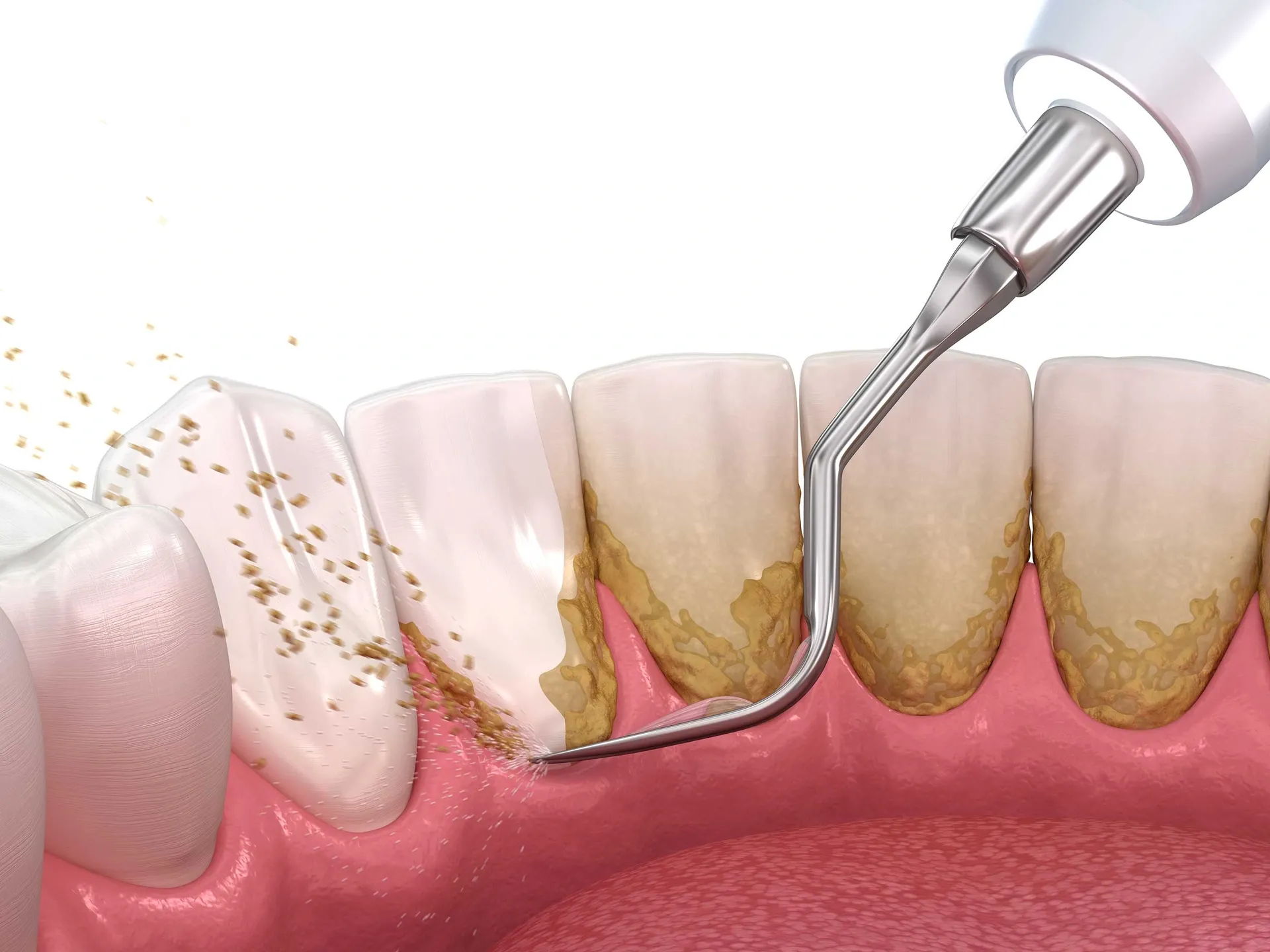
A clean smile is not only about appearance; it is also an important part of good oral health. Even with daily brushing and flossing, plaque and tartar can build up in areas that are difficult to clean at home. Over time, this buildup may lead to bad breath, gum bleeding, tooth sensitivity, cavities, and gum disease. That is why professional dental scaling is one of the most important preventive dental treatments. If you are searching for dental scaling in G-8 Islamabad, Smile and Skin Co. offers professional dental cleaning services in a comfortable and hygienic clinical environment. Our goal is to help patients maintain healthier teeth, fresher breath, and stronger gums through safe and effective dental care. What Is Dental Scaling? Dental scaling is a professional cleaning procedure that removes plaque, tartar, and stains from the teeth. Plaque is a sticky layer of bacteria that forms on the teeth throughout the day. If it is not removed properly, it can harden into tartar, also known as calculus. Once tartar forms, it cannot be removed by regular brushing or flossing at home. A professional dental cleaning is needed to remove it safely. Mayo Clinic notes that tartar cannot be removed by brushing and flossing alone and requires professional dental cleaning. During dental scaling, the dentist uses special instruments to clean the surfaces of the teeth, especially around the gum line and between the teeth. In many cases, polishing is also done after scaling to smooth the tooth surface and remove minor surface stains. Why Dental Scaling Is Important Many people visit a dentist only when they feel pain, but preventive dental care can help avoid bigger problems in the future. Dental scaling plays an important role in preventing gum inflammation and controlling plaque buildup. When plaque and tartar remain on the teeth for too long, they create a favorable environment for bacteria. This can irritate the gums and cause redness, swelling, tenderness, and bleeding. If gum disease is ignored, it may progress and affect the supporting tissues around the teeth. The National Institute of Dental and Craniofacial Research explains that plaque can harden into tartar and that tartar buildup can lead to gum disease; only professional cleaning by a dentist or dental hygienist can remove tartar. Signs You May Need Dental Scaling You may benefit from dental scaling if you notice yellow or brown deposits near your gum line, bleeding gums while brushing, persistent bad breath, swollen gums, rough tooth surfaces, stains from tea or coffee, or sensitivity around the gums. Some patients do not notice obvious symptoms in the early stages of plaque buildup. This is why routine dental checkups are important. A dentist can identify tartar, gum inflammation, and early signs of dental problems before they become more serious. Dental Scaling in G-8 Islamabad: Why Location Matters G-8 is one of Islamabad’s most convenient and central sectors. It is close to G-9, F-8, Blue Area, PIMS, and other major parts of the city. For residents, professionals, students, and families in nearby areas, choosing a dental clinic in G-8 Islamabad makes routine oral care easier to manage. At Smile and Skin Co., patients can access dental scaling and other dental services without unnecessary travel across the city. A convenient location can make it easier to keep up with regular checkups and cleanings, especially for people with busy schedules. What Happens During a Dental Scaling Appointment? A dental scaling appointment usually begins with an oral examination. The dentist checks your teeth and gums, looks for plaque and tartar buildup, and evaluates your overall oral health. If scaling is suitable for you, the cleaning process begins. The dentist carefully removes plaque and tartar from the teeth, especially near the gum line and between teeth. These are areas where buildup commonly collects. After scaling, polishing may be performed to make the teeth feel smoother and cleaner. Some patients may feel mild sensitivity during or after the procedure, especially if they already have gum recession, exposed roots, or heavy tartar deposits. This sensitivity is usually temporary. Your dentist may give aftercare advice based on your oral condition. Does Dental Scaling Hurt? For most people, dental scaling is not painful. You may feel vibration, pressure, scraping sensations, or mild sensitivity, especially around areas with more tartar buildup. If your gums are inflamed or sensitive, you may feel slight discomfort during cleaning. At Smile and Skin Co., patient comfort is a priority. The dentist will work carefully and explain the process so you feel relaxed during your visit. If you have dental anxiety, sensitivity, or a previous uncomfortable experience, it is best to share this before treatment so your care can be adjusted accordingly. Dental Scaling vs. Teeth Whitening Many people confuse dental scaling with teeth whitening, but both treatments are different. Dental scaling is a cleaning procedure that removes plaque, tartar, and some surface stains. It supports gum health and oral hygiene. Teeth whitening is a cosmetic treatment that lightens the natural shade of teeth. After scaling and polishing, your teeth may look cleaner and brighter because surface stains and deposits have been removed. However, scaling does not change the natural internal color of the teeth like whitening treatment can. If you want a brighter smile after cleaning, your dentist can guide you on whether whitening is suitable for you. How Often Should You Get Dental Scaling? The right frequency depends on your oral health, plaque buildup, gum condition, diet, smoking habits, and brushing technique. Some patients may need scaling every six months, while others may need it more or less often based on the dentist’s recommendation. Mayo Clinic advises regular professional dental cleanings on a schedule recommended by your dentist, along with daily brushing and flossing. People who smoke, drink tea or coffee frequently, have gum bleeding, wear braces, or have a history of gum disease may need more regular cleanings. Benefits of Dental Scaling Dental scaling offers several benefits. It removes tartar that brushing cannot remove, helps reduce gum inflammation, improves breath
Teeth Whitening in G-8 Islamabad: Brighten Your Smile with Smile and Skin Co.
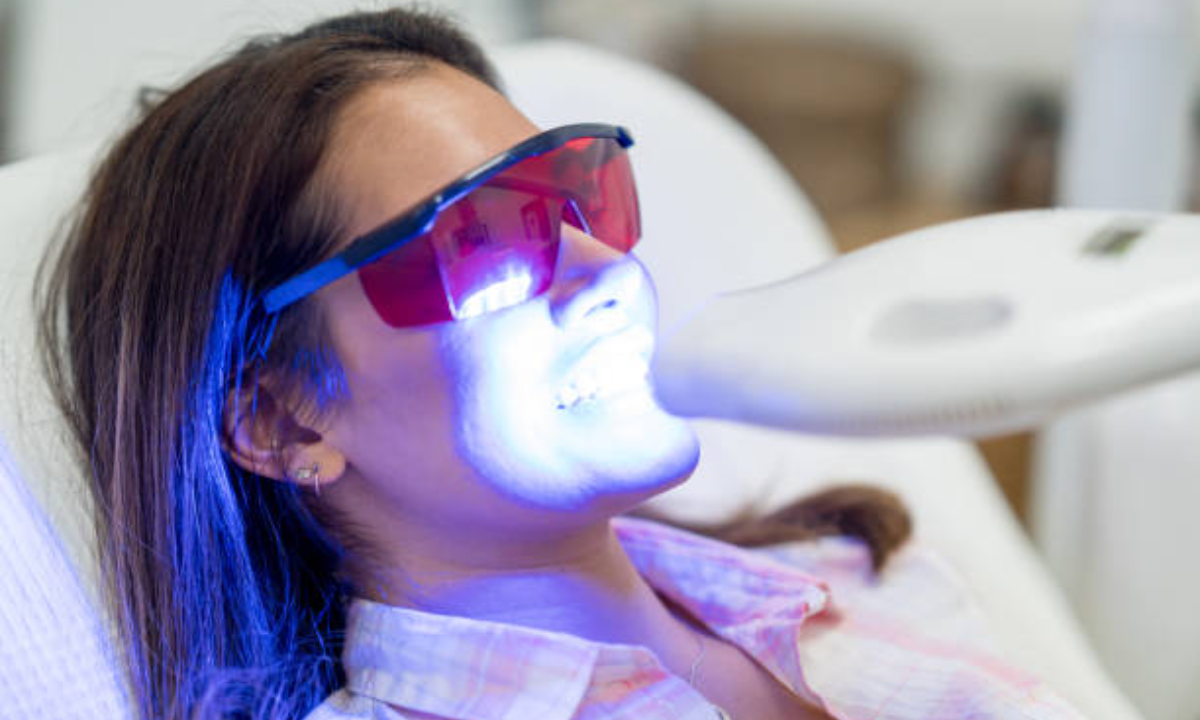
A bright, confident smile can make a powerful first impression. Whether you are preparing for a wedding, an interview, a professional meeting, or simply want to feel better about your appearance, teeth whitening is one of the most popular cosmetic dental treatments today. For people living or working in G-8 Islamabad, finding a reliable and professional dental clinic nearby can make the process easier, safer, and more comfortable. At Smile and Skin Co., we understand that your smile is a key part of your personality. Our teeth whitening services in G-8 Islamabad are designed to help reduce visible stains, improve tooth brightness, and give you a fresher, cleaner-looking smile under professional dental supervision. Why Do Teeth Become Yellow or Stained? Tooth discoloration is common and can happen for many reasons. Over time, everyday habits can affect the natural shade of your teeth. Tea, coffee, soft drinks, smoking, paan, certain foods, and poor oral hygiene can gradually create surface stains. Even people who brush regularly may notice their teeth becoming dull due to age, enamel changes, or lifestyle factors. Some stains are external, meaning they sit on the outer surface of the teeth. These are often caused by food, drinks, and tobacco. Other stains may be deeper and harder to remove with regular brushing or whitening toothpaste. This is where professional teeth whitening can help. What Is Professional Teeth Whitening? Professional teeth whitening is a cosmetic dental procedure that helps lighten the shade of natural teeth. Unlike regular toothpaste or home remedies, professional whitening is performed under dental guidance. This makes it a safer and more controlled option for people who want noticeable results. At Smile and Skin Co. in G-8 Islamabad, the process begins with a dental consultation. Your dentist checks your teeth and gums to make sure whitening is suitable for you. This step is important because problems such as cavities, gum disease, worn enamel, or tooth sensitivity should be addressed before whitening treatment. Why Choose Teeth Whitening in G-8 Islamabad? G-8 is one of Islamabad’s most accessible sectors, located close to major areas such as Blue Area, F-8, G-9, and PIMS. For busy professionals, students, families, and residents nearby, choosing a dental clinic in G-8 makes dental care more convenient. Instead of traveling far across the city, patients can visit Smile and Skin Co. for professional cosmetic dental care in a comfortable and accessible location. Whether you need whitening before a special event or want to improve your smile gradually, having a trusted clinic nearby makes the experience easier. Benefits of Professional Teeth Whitening Professional teeth whitening can offer several benefits when done correctly. The most obvious benefit is a brighter smile. Many patients feel more confident after whitening because their teeth look cleaner and more attractive. Another benefit is that treatment is supervised by a dental professional. This reduces the risk of incorrect product use, gum irritation, or uneven results. Professional whitening may also be more effective than over-the-counter whitening products because the dentist can select an approach based on your oral condition and desired outcome. Teeth whitening can also motivate better oral hygiene. When people feel good about their smile, they are often more likely to maintain regular brushing, flossing, dental cleaning, and routine checkups. Is Teeth Whitening Safe? Teeth whitening is generally considered safe when performed properly and under professional supervision. However, it may not be suitable for everyone. Some people experience temporary tooth sensitivity after whitening. Others may feel mild gum irritation if whitening gel touches the soft tissues. This is why a proper dental evaluation matters. At Smile and Skin Co., patient safety and comfort come first. Your dentist will examine your teeth, discuss your concerns, and recommend the most suitable whitening option for your smile. It is also important to understand that whitening only works on natural tooth enamel. Dental crowns, veneers, fillings, and bridges do not whiten the same way natural teeth do. If you have visible restorations, your dentist may discuss how whitening could affect the overall shade balance of your smile. Professional Whitening vs. Home Remedies Many people try home remedies for teeth whitening, such as baking soda, lemon juice, charcoal powder, or random whitening kits. While these may seem convenient, they can also be risky if used incorrectly. Harsh or acidic substances may damage enamel, irritate gums, or increase sensitivity. Professional whitening is different because it is planned according to your oral health. A dentist can identify the cause of staining and recommend the right treatment. For example, if your teeth are stained because of tartar buildup, you may need scaling and polishing before whitening. If stains are deeper, a professional whitening system may be more suitable. Who Can Consider Teeth Whitening? Teeth whitening may be a good option for adults who have healthy teeth and gums but are unhappy with yellow, dull, or stained teeth. It is especially popular among people preparing for weddings, engagements, graduation photos, job interviews, public speaking, or professional events. You may be a good candidate if your stains are caused by tea, coffee, smoking, or general aging. However, whitening may not be ideal if you have untreated cavities, severe gum problems, extreme sensitivity, exposed roots, or many visible dental restorations. A consultation at Smile and Skin Co. can help determine whether whitening is right for you. What to Expect During Your Visit When you visit Smile and Skin Co. for teeth whitening in G-8 Islamabad, your appointment usually starts with a consultation. The dentist will examine your teeth, ask about your dental history, and discuss your smile goals. In some cases, cleaning may be recommended before whitening to remove plaque and tartar. The whitening process depends on the method selected for you. Your gums and soft tissues are protected, and the whitening material is applied carefully to the teeth. The dentist monitors the process to help reduce discomfort and achieve an even result. After whitening, your teeth may feel slightly sensitive for a short time. This is usually temporary. Your dentist

Why Do Dentists “Push” X-Rays?
If you have ever gone in for a routine dental visit and been told you need X-rays, it is easy to wonder whether they are truly necessary. Some patients feel dentists “push” X-rays too often, especially when nothing hurts. That skepticism is understandable. Dental X-rays cost money, involve radiation, and can feel like an extra step added to a simple checkup. But in most cases, the reason dentists recommend them is not because they want more procedures. It is because many dental problems cannot be seen clearly with the naked eye alone. The American Dental Association says dental X-rays help diagnose damage and disease that may not be visible during a regular exam, and the FDA says they should be ordered to support diagnosis and treatment while still minimizing radiation exposure. X-Rays Let Dentists See What Eyes Cannot A dentist can look at your teeth, gums, and mouth during an exam, but some problems hide below the surface. X-rays help show areas between teeth, under fillings, below the gums, and inside the bone. According to ADA patient guidance, dental radiographs can help detect cavities between teeth or under restorations, bone disease, gum disease, infections under the gums, and even some tumors. They are also useful for seeing injuries and developmental issues in children. In other words, X-rays are not just pictures for the file. They are often how dentists catch problems before they become painful, expensive, or harder to treat. Why Dentists Recommend Them Even When Nothing Hurts One of the biggest reasons patients feel unsure about X-rays is that dentists often recommend them when there are no symptoms. But that is exactly the point of preventive care. Tooth decay between the teeth may not hurt at first. Bone loss from gum disease can progress quietly. An infection near a tooth root may not be obvious until it becomes severe. The ADA explains that X-rays can help identify disease and developmental problems before they become serious health issues, and that early detection can limit or prevent further damage in the mouth. So when a dentist recommends imaging during a symptom-free visit, it is often because they are trying to find problems early, not invent them. There Is No Fixed Schedule for Everyone A lot of frustration comes from the belief that dental offices automatically take X-rays every six months or once a year no matter who you are. Official guidance says that is not how X-rays should be used. The ADA states there is no “one size fits all” interval for dental X-rays. How often they are needed depends on your age, current oral health, signs and symptoms, past dental history, and risk for disease. The FDA and ADA guidance also says imaging recommendations are meant to support the dentist’s judgment for each individual patient, not serve as a rigid rule. A patient with frequent cavities or ongoing gum problems may need them more often than a patient with low risk and stable oral health. Good Dentists Are Supposed to Order X-Rays Only When Clinically Necessary This is one of the most important points. Modern guidance does not support routine X-rays just because it is convenient or profitable. The ADA’s 2026 recommendations say dental X-rays should be ordered only when clinically necessary, after reviewing the patient’s medical and dental history, prior images, and current clinical findings. The FDA’s guidance on appropriate imaging also says an imaging test is appropriate when the expected health benefit outweighs the negatives. In plain English, a dentist should have a reason for recommending the X-ray, and that reason should be tied to diagnosis, treatment planning, or monitoring a real problem. Why It Can Feel Like They Are Being “Pushed” Even when a recommendation is legitimate, it may still feel like pressure to the patient. Dental offices move quickly, and sometimes the explanation is too brief. A patient may hear, “You’re due for X-rays,” without being told what the dentist is looking for or why now is the right time. That communication gap can make the recommendation feel automatic or sales-driven. The ADA itself encourages discussion between dentists and patients so they can make informed decisions together. A recommendation should not feel like a command. A good dental team should be able to explain what type of image they want, what they are checking for, and why previous images are or are not enough. X-Rays Are Also Used for More Than Cavities Many people think dental X-rays are only for finding decay, but dentists use them for much more than that. They can help monitor bone levels around teeth, evaluate infections near roots, assess wisdom teeth, check healing after treatment, plan root canals, orthodontics, implants, and in some cases evaluate jaw or temporomandibular issues. The ADA’s updated patient-selection recommendations specifically address situations involving cracked teeth, endodontics, implant planning, and more. So even if your teeth look fine in the mirror, your dentist may still need X-rays to plan or confirm treatment safely. What About Radiation? Radiation is the biggest reason many patients hesitate, and it is a fair concern. Dental X-rays do use ionizing radiation, which is why professional guidance emphasizes using them only when justified and keeping exposure as low as reasonably achievable, a principle called ALARA. The ADA says dental imaging represents a minor contribution to total radiation exposure and accounts for less than 1 percent of the collective annual effective dose from medical imaging. The 2026 ADA release also notes that in some cases, a dental X-ray delivers less radiation than a single day of natural background radiation. That does not mean radiation should be ignored. It means the risk is generally low when imaging is used appropriately and modern dose-reduction practices are followed. Modern Dental Imaging Uses Safety Measures Today’s recommendations focus heavily on reducing exposure while still getting the image the dentist needs. The ADA recommends steps such as using digital imaging instead of conventional film, limiting the beam to the area of interest through rectangular collimation, properly positioning patients,
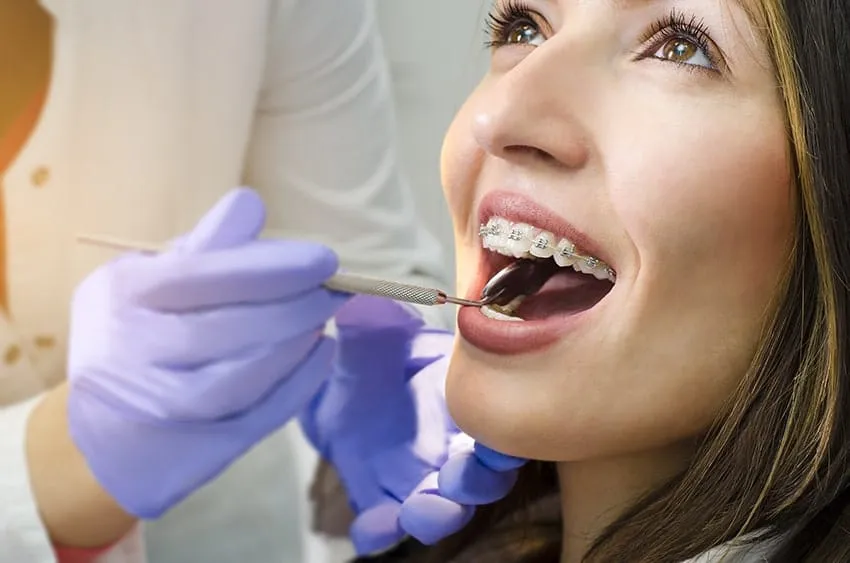
Why Do Dentists Remove Teeth for Braces?
Getting braces is supposed to make your smile better, so hearing that a dentist or orthodontist wants to remove teeth first can feel confusing or even scary. Many people wonder why teeth need to come out at all. If braces straighten teeth, shouldn’t they just fix the problem without removing anything? The truth is, tooth removal for braces is sometimes necessary to create enough space in the mouth for proper alignment. It is not done in every case, and it is never supposed to be random. Orthodontists recommend extractions only when they believe it will help produce a healthier bite, a straighter smile, and a more stable long-term result. Braces Move Teeth, But They Do Not Create Space One of the most important things to understand is that braces move teeth, but they do not make teeth smaller. They also do not magically create extra room in the jaw. If a person has too many teeth crowded into a small space, the orthodontist has to find a way to make room before everything can be aligned properly. Think of it like trying to arrange too many books on a short shelf. You can shift them around, but if there are simply too many books for the space available, something has to change. In orthodontics, removing one or more teeth can create that needed space so the remaining teeth can move into better positions. Severe Crowding Is a Common Reason One of the main reasons teeth are removed for braces is severe crowding. Crowding happens when the jaw does not have enough room for all the permanent teeth to fit correctly. As a result, teeth can overlap, twist, stick out, or grow in unusual positions. When crowding is mild, orthodontists may be able to fix it without extractions. But when the crowding is more serious, removing teeth may be the safest and most effective way to make enough space. Without that space, the orthodontist may not be able to align the teeth properly, or the teeth may end up being pushed too far outward, which can affect both appearance and gum health. Protruding Front Teeth May Need More Room Another reason for extraction is when the front teeth stick out too far. Some patients have upper front teeth that project forward noticeably. Others may have lips that do not close comfortably because the front teeth are too prominent. In these cases, braces alone may not be enough unless there is room to move those teeth backward. Removing teeth can create the space needed to pull the front teeth into a more balanced position. This can improve both the smile and the facial profile. For some people, this also reduces the risk of injury to front teeth that are sticking out too much, especially in children and teenagers who are active in sports or physical activities. Tooth Removal Can Help Fix Bite Problems Braces are not only about making teeth look straight. They are also used to correct the bite, which means how the upper and lower teeth fit together when the mouth closes. If the bite is off, it can lead to chewing problems, uneven tooth wear, jaw discomfort, and other issues over time. In some cases, tooth extraction helps create the space needed to move teeth into the correct bite relationship. For example, a patient may have an overbite, overjet, or another kind of misalignment where the teeth cannot be guided into the right position without first removing some teeth. In such cases, extraction becomes part of a bigger plan to improve both function and appearance. Not Everyone With Braces Needs Teeth Removed A lot of people assume that getting braces automatically means having teeth removed, but that is not true. Many orthodontic patients complete treatment without any extractions at all. Modern orthodontics offers different methods to create space depending on the case. Sometimes an orthodontist can slightly widen the dental arch. In other cases, they may use techniques such as shaving a tiny amount of enamel between certain teeth to gain small amounts of room. Some younger patients may benefit from jaw expansion if the upper jaw is too narrow. So if one person had extractions before braces and another person did not, that does not mean one treatment was better than the other. It simply means their mouths, teeth, and orthodontic needs were different. Why Alternatives Do Not Always Work People often ask why dentists cannot just use alternatives instead of pulling teeth. The answer is that alternatives do work in some cases, but not in all of them. If the mouth only needs a little extra room, small adjustments may be enough. But if the crowding is severe or the front teeth need to move back significantly, those methods may not create enough space. Trying to avoid extraction in a case that clearly needs it can sometimes lead to poor results, unstable alignment, or teeth being pushed into unhealthy positions. Orthodontists are trained to study the full picture before deciding. They look at tooth size, jaw size, facial balance, gum health, bite problems, and long-term stability before recommending any plan. The Goal Is Not Just Straight Teeth Many patients focus on having straight teeth, but orthodontists think beyond that. A good treatment result must also be healthy, functional, and stable. That means the teeth should fit well together, be easy to clean, and stay in place after treatment is finished. If an orthodontist tries to fit too many teeth into too little space just to avoid extractions, the final result may not last well. Teeth may shift back more easily, or the gums and bone may not support the new positions properly. This is why extraction decisions are usually based on long-term success, not just short-term appearance. Which Teeth Are Usually Removed? When extractions are recommended for braces, orthodontists often choose premolars. These are the teeth located between the canines and molars. Premolars are commonly selected because removing them can create useful space in the middle
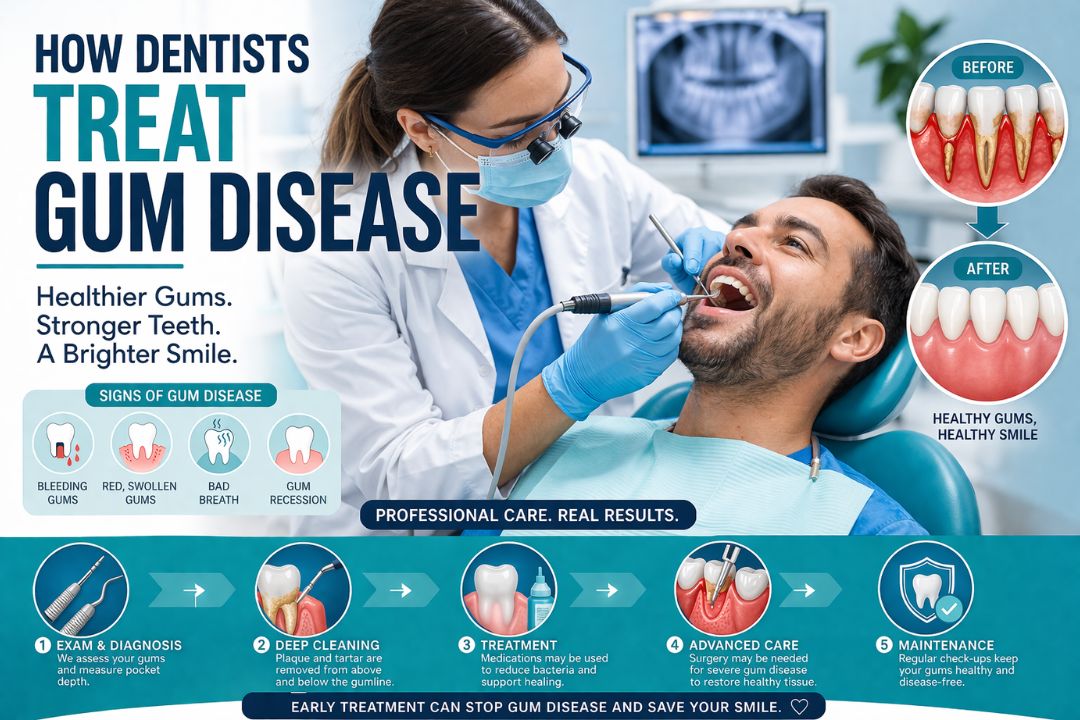
How Dentists Treat Gum Disease?
Gum disease is one of the most common oral health problems, but many people do not realise how serious it can become if left untreated. It usually starts as gingivitis, which causes red, swollen, or bleeding gums. If it is not treated early, it can progress to periodontitis, a more advanced form of gum disease that can damage the tissues and bone supporting the teeth. Health authorities including the NHS, CDC, and NIDCR all describe this progression and note that early treatment gives the best chance of controlling the problem. The good news is that dentists can treat gum disease, and in many cases they can stop it from getting worse. The exact treatment depends on how advanced the condition is. Some patients only need professional cleaning and better home care, while others may need deep cleaning, medication, or periodontal surgery. The main goal is always the same: remove plaque and tartar, control infection, reduce inflammation, and protect the teeth and gums for the long term. Dentists start with a full gum assessment Before choosing treatment, a dentist will examine the gums carefully. They will usually look for redness, swelling, bleeding, gum recession, plaque buildup, loose teeth, and bad breath. In many cases, they will also measure the spaces between the teeth and gums, often called periodontal pockets. These measurements help show whether the disease is mild, moderate, or advanced. If needed, dental X-rays may also be taken to check if there has been any bone loss around the teeth. The CDC and NIDCR both note that periodontitis involves deeper tissue and bone support, so proper assessment is important before treatment begins. This first stage matters because gum disease is not treated the same way in every patient. A person with mild gingivitis may improve with relatively simple care, while someone with periodontitis may need multiple treatment visits and ongoing maintenance. Professional cleaning for early gum disease If the dentist finds early gum disease, especially gingivitis, treatment often begins with a professional cleaning. This removes plaque and tartar from the teeth and around the gumline. Tartar cannot be removed by normal brushing at home, so professional cleaning is essential once it has formed. NIDCR explains that gingivitis is usually reversible with good daily brushing and flossing together with regular cleaning by a dentist or dental hygienist. At this stage, the dentist or hygienist will also teach the patient how to clean the teeth properly at home. This usually includes brushing twice a day, cleaning between the teeth, and improving daily plaque control. The NHS and CDC both recommend strong home care habits because gum disease often starts with plaque buildup that is not being removed effectively. For many patients with gingivitis, this combination of professional cleaning and better home care is enough to reduce inflammation and stop bleeding gums. Deep cleaning for periodontitis When gum disease has progressed beyond gingivitis, dentists often use a treatment called scaling and root planing, also known as deep cleaning. This is one of the most common non-surgical treatments for periodontitis. The CDC describes scaling and root planing as a procedure that cleans the affected tooth and root surfaces below the gumline, while the ADA notes it as a standard nonsurgical treatment for chronic periodontitis. Scaling removes plaque, bacteria, and tartar from above and below the gums. Root planing smooths the root surfaces so the gums can heal and reattach more effectively. This treatment helps reduce pocket depth and makes it harder for harmful bacteria to collect again. Deep cleaning is often done over one or more appointments, depending on how many areas are affected. Some patients may receive local anaesthetic to keep the treatment comfortable. After treatment, the gums may feel sore or sensitive for a short time, but this usually settles as healing begins. Medication may be used in some cases Dentists do not always need medication to treat gum disease, but it can be helpful in certain situations. According to the CDC and ADA, treatment may include prescribed mouth rinses or medication placed directly under the gums, and some patients may receive antibiotics as an additional measure in selected cases. However, medication is usually not the main treatment on its own. Dentists focus first on physically removing plaque, tartar, and infected material. Medicine is more of a support tool than a replacement for proper periodontal care. That is why patients should not expect a prescription alone to solve gum disease. Dentists also address the cause An important part of gum disease treatment is identifying the factors that are making the condition worse. Dentists often talk to patients about smoking, poor oral hygiene, missed dental visits, stress, certain medical conditions, and uncontrolled diabetes. NIDCR states that treatment success depends not only on professional care but also on daily home care and behaviour changes such as quitting smoking. The CDC also highlights smoking as a major risk factor for periodontitis and notes that quitting helps gums heal after treatment. This means treatment is not just about what happens in the dental chair. It also includes what the patient does every day afterwards. A dentist may recommend a softer brushing technique, regular flossing or interdental cleaning, smoking cessation, and more frequent follow-up appointments. Follow-up visits are a key part of treatment One thing many patients do not realise is that gum disease treatment does not end after one cleaning. Dentists usually review the gums after treatment to see how well they are healing. The ADA notes that after scaling and root planing, the periodontal tissues need time to show the effects of nonsurgical therapy, and reassessment is important. At the review visit, the dentist may check whether bleeding has improved, whether pocket depths have reduced, and whether the patient’s home care is working. If the gums are healthier, the next step is maintenance. If deeper pockets or inflammation remain, more treatment may be needed. This maintenance phase is extremely important. Gum disease can return if plaque control slips, so many patients with a history
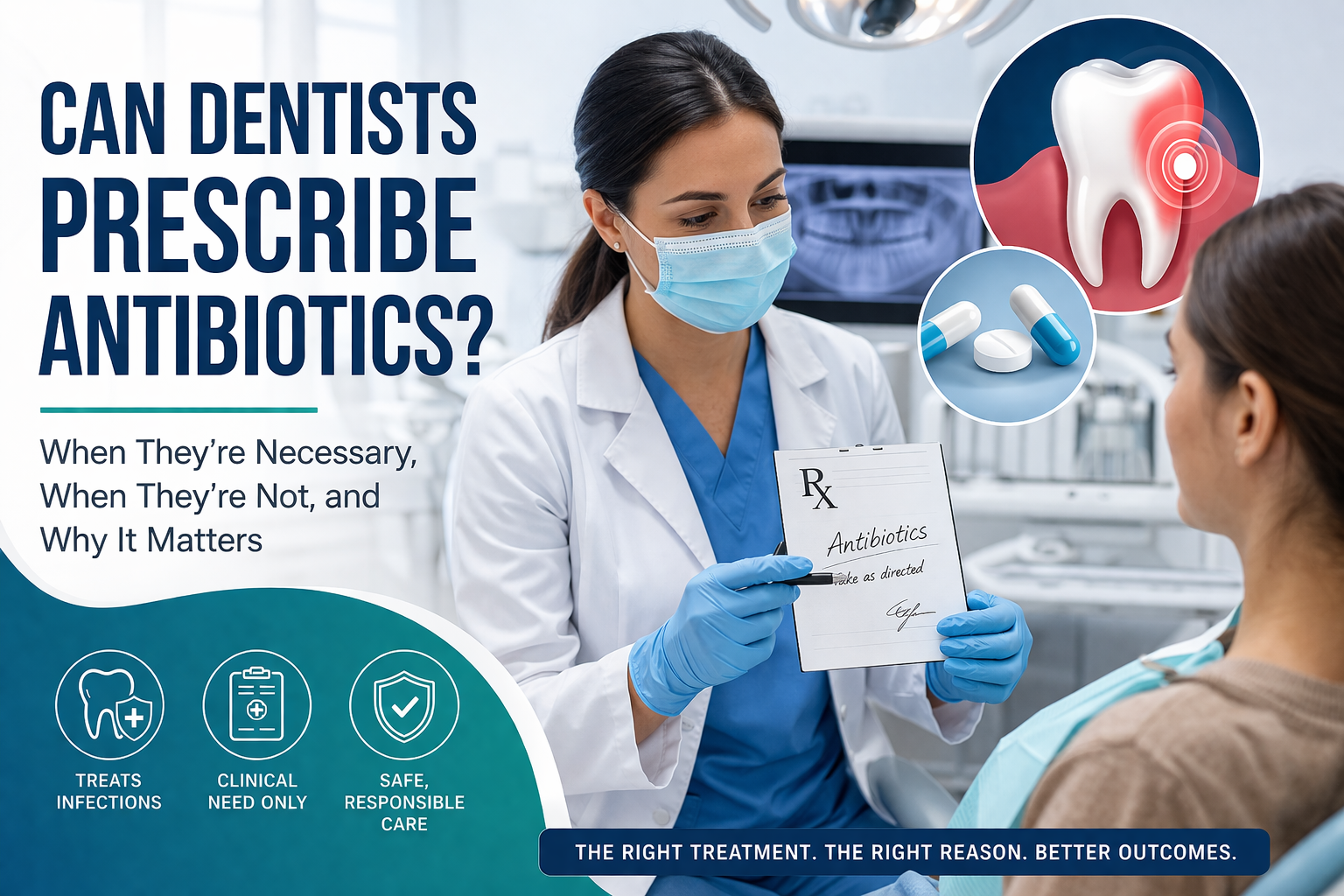
Can Dentists Prescribe Antibiotics?
Yes, dentists can prescribe antibiotics, but they do not prescribe them for every toothache or dental problem. Dentists are licensed healthcare professionals who can prescribe medicines that relate to dental treatment, including antibiotics when there is a clear clinical need. In the UK, for example, the General Dental Council states that dentists may prescribe medicines to meet the identified dental needs of their patients, and in the U.S., the American Dental Association provides clinical guidance on when antibiotics are and are not appropriate in dental care. That distinction matters because many people assume antibiotics are the default answer for gum pain, swelling, or a suspected tooth infection. In reality, antibiotics are only one part of treatment, and in many cases they are not the main treatment at all. A dental infection often needs direct dental care, such as draining the infection, removing the source of the problem, carrying out root canal treatment, or extracting the affected tooth. Both NHS guidance and ADA guidance emphasize that dental infections usually need urgent dental treatment rather than relying on antibiotics alone. When can a dentist prescribe antibiotics? A dentist may prescribe antibiotics when there is evidence that a bacterial dental infection is spreading, is severe, or could become dangerous. This may include facial swelling, systemic symptoms such as fever or malaise, or situations where the patient is at higher risk of complications. The ADA’s antibiotic guidance says antibiotics are generally indicated when a dental infection has systemic involvement, and NHS Scotland guidance similarly notes that antibiotics are recommended when there are signs of severe infection, systemic symptoms, or high risk of complications. Dentists may also prescribe antibiotics in selected preventive situations before certain dental procedures. This is called antibiotic prophylaxis. However, this is not routine for everyone. ADA and American Heart Association guidance says preventive antibiotics before dental work should generally be reserved for patients with specific cardiac conditions that place them at the highest risk of poor outcomes from infective endocarditis. So the short answer is yes, dentists can prescribe antibiotics, but only when the diagnosis and medical history justify it. Good prescribing is not about giving antibiotics “just in case.” It is about choosing them when they are truly likely to help. The CDC describes antibiotic stewardship as making sure antibiotics are prescribed only when needed, using the right drug, dose, and duration. When antibiotics are usually not needed This is where many patients are surprised. Not every dental pain problem is an infection, and not every infection needs antibiotics. The ADA guideline for dental pain and swelling advises that, for many pulpal and periapical conditions in otherwise healthy adults, dentists should prioritize procedures such as pulpotomy, pulpectomy, nonsurgical root canal treatment, or incision and drainage instead of prescribing antibiotics. For example, a patient may have a severe toothache caused by inflammation inside the tooth, but if the infection is localized and there are no systemic symptoms, antibiotics may offer little benefit. In those situations, direct dental treatment addresses the source, while antibiotics may add unnecessary risk. NHS dental abscess guidance also makes clear that an abscess will not go away on its own and needs treatment from a dentist. Repeated courses of antibiotics without proper dental treatment can also be ineffective. NHS Scotland guidance specifically notes that repeated antibiotics alone, without drainage, are not appropriate and do not prevent the spread of infection effectively. That is why a dentist may tell a patient, “You need treatment, not just tablets.” Why dentists should avoid unnecessary antibiotics Overprescribing antibiotics is a serious healthcare issue. Antibiotics can cause side effects, including stomach upset, allergic reactions, and more serious complications in some patients. They also contribute to antimicrobial resistance, which happens when bacteria adapt and antibiotics become less effective. The CDC and ADA both promote antibiotic stewardship in dentistry because improving antibiotic use helps protect patient safety and reduce resistance. This means a careful dentist is not being dismissive by refusing to prescribe antibiotics when they are not needed. In many cases, that is actually the safer and more evidence-based approach. Good dental care means treating the cause of the problem while avoiding medication that offers little benefit. What antibiotics do dentists commonly prescribe? When antibiotics are indicated, dentists may prescribe drugs commonly used for bacterial dental infections. Guidance cited by the CDC includes amoxicillin or penicillin V potassium as common options when antibiotic therapy is needed for a dental infection. NHS medicine guidance also notes that amoxicillin is used for bacterial infections including dental abscesses. In some cases, a dentist may choose alternatives based on allergy history, medical conditions, current medications, or local prescribing guidance. The exact antibiotic and dose should always be decided by the treating clinician after reviewing the patient’s health background. That is one reason patients should not self-medicate with leftover antibiotics or antibiotics borrowed from someone else. Can dentists prescribe antibiotics for gum infections? Sometimes, yes. Dentists may prescribe antibiotics for certain gum or periodontal infections, especially if the infection is acute, spreading, or accompanied by swelling and systemic symptoms. But again, antibiotics alone are rarely the full answer. Cleaning, drainage, oral hygiene support, and treatment of the underlying dental or gum disease remain essential. The broad clinical principle in dental guidance is that source control and dental intervention come first, with antibiotics used selectively when clinically justified. Can dentists prescribe antibiotics over the phone? Policies can vary by country, state, and practice rules, so this is not a simple yes-or-no issue everywhere. In general, dentists are expected to prescribe responsibly and based on an appropriate clinical assessment of the patient’s dental needs. Regulatory guidance emphasizes that prescribing should be tied to identified patient need, which usually means the dentist must have enough information to make a safe decision. In practice, a dentist may sometimes issue a prescription after assessing a patient remotely, especially in urgent situations, but this depends on local rules, the dentist’s judgment, and whether the clinical picture is clear enough to prescribe safely. Because
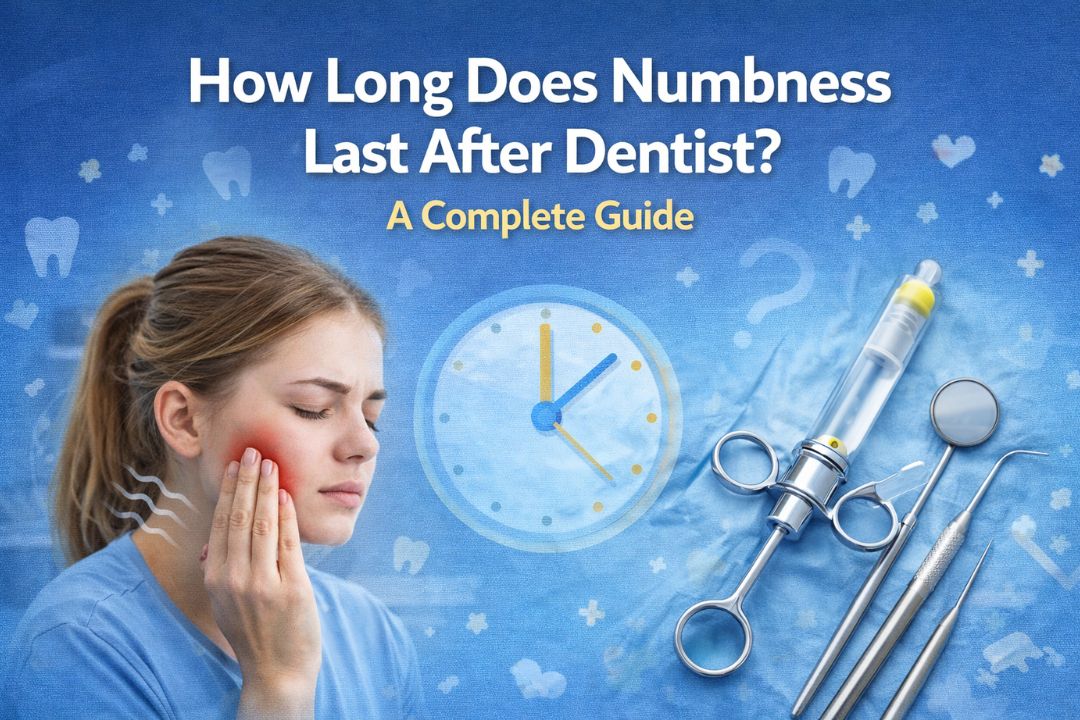
How Long Does Numbness Last After Dentist? A Complete Guide
If you’ve ever visited the dentist for a filling, extraction, or root canal, you’ve likely experienced that strange, tingling numbness afterward. It can feel unusual — your lips, tongue, or cheek may seem swollen or hard to control. One of the most common questions patients ask is: How long does numbness last after a dentist visit? In this complete guide, we’ll break down how dental anesthesia works, how long numbness typically lasts, what affects it, and when you should be concerned. Why Do Dentists Use Numbing Injections? Before we talk about duration, it’s important to understand why numbness happens in the first place. Dentists use local anesthesia to block pain during procedures. This allows you to stay comfortable while the dentist works on your teeth without feeling discomfort. Common procedures that require numbing include: The anesthetic temporarily blocks nerve signals in the treated area, which is why you don’t feel pain — but also lose sensation. How Long Does Numbness Last After Dental Work? Typical Duration: 1 to 4 Hours In most cases, numbness lasts between: 👉 1 to 2 hours for mild procedures👉 2 to 4 hours for more complex treatments However, this can vary depending on the type of anesthesia used and the area treated. Breakdown by Type of Dental Procedure 1. Fillings For simple fillings, numbness usually lasts: You’ll likely regain full sensation fairly quickly. 2. Tooth Extraction For extractions (especially wisdom teeth): Some lingering numbness or soreness may continue after the anesthesia wears off. 3. Root Canal Treatment Root canals often require deeper anesthesia: 4. Deep Cleaning (Scaling) If your gums are treated: Your lips and gums may feel numb for a bit longer than usual. What Factors Affect How Long Numbness Lasts? Not everyone experiences numbness the same way. Several factors influence how long it lasts. 1. Type of Anesthetic Used Different anesthetics last for different durations: 2. Injection Location Where the injection is given matters: 3. Your Metabolism People with faster metabolism may process anesthesia quicker, meaning: 4. Dosage Given More complex procedures require more anesthesia, which can: 5. Age and Body Response Children and older adults may experience: What Does Numbness Feel Like? After your dental visit, you may experience: This is completely normal and temporary. When Does Numbness Fully Go Away? As the anesthesia wears off, you’ll notice: This process usually happens gradually over a few hours. Is It Normal for Numbness to Last Longer? Yes — Sometimes In some cases, numbness may last longer than expected, especially: When to Be Concerned You should contact your dentist if: This could indicate a rare condition called nerve irritation or injury. How to Make Numbness Go Away Faster While you can’t instantly remove numbness, there are ways to help your body recover faster. ✔ Move Your Jaw Gently Light movements like talking or chewing (carefully) can help improve blood flow. ✔ Massage the Area (Lightly) Gently rubbing your cheek (outside only) can stimulate circulation. ✔ Stay Hydrated Drinking water helps your body metabolize the anesthetic. ✔ Warm Compress Applying a warm cloth externally can increase blood flow. ✔ Be Patient Time is the main factor — your body will naturally process the anesthetic. What to Avoid While Numb This is very important to prevent injury. ✖ Don’t Eat Immediately You might accidentally: Wait until sensation returns. ✖ Avoid Hot Drinks Since you can’t feel temperature properly, you could: ✖ Don’t Chew Gum You may unknowingly damage soft tissues. ✖ Be Careful with Kids Children often bite their lips while numb — keep an eye on them. Special Case: Lip and Tongue Numbness Sometimes, especially with lower jaw injections, numbness spreads to: This is normal and may last longer than tooth numbness. Can Numbness Last for Days? This is rare, but possible. Possible Reasons: Most cases resolve on their own, but always consult your dentist if it continues. Quick Summary Final Thoughts Numbness after a dental procedure might feel uncomfortable or strange, but it’s completely normal and temporary. It’s actually a sign that the anesthesia is working — protecting you from pain during treatment. Understanding how long it lasts and what to expect can make your dental experience much more stress-free. If you ever feel unsure or experience unusual symptoms, don’t hesitate to contact your dentist — it’s always better to be safe.

 and Innovation by